

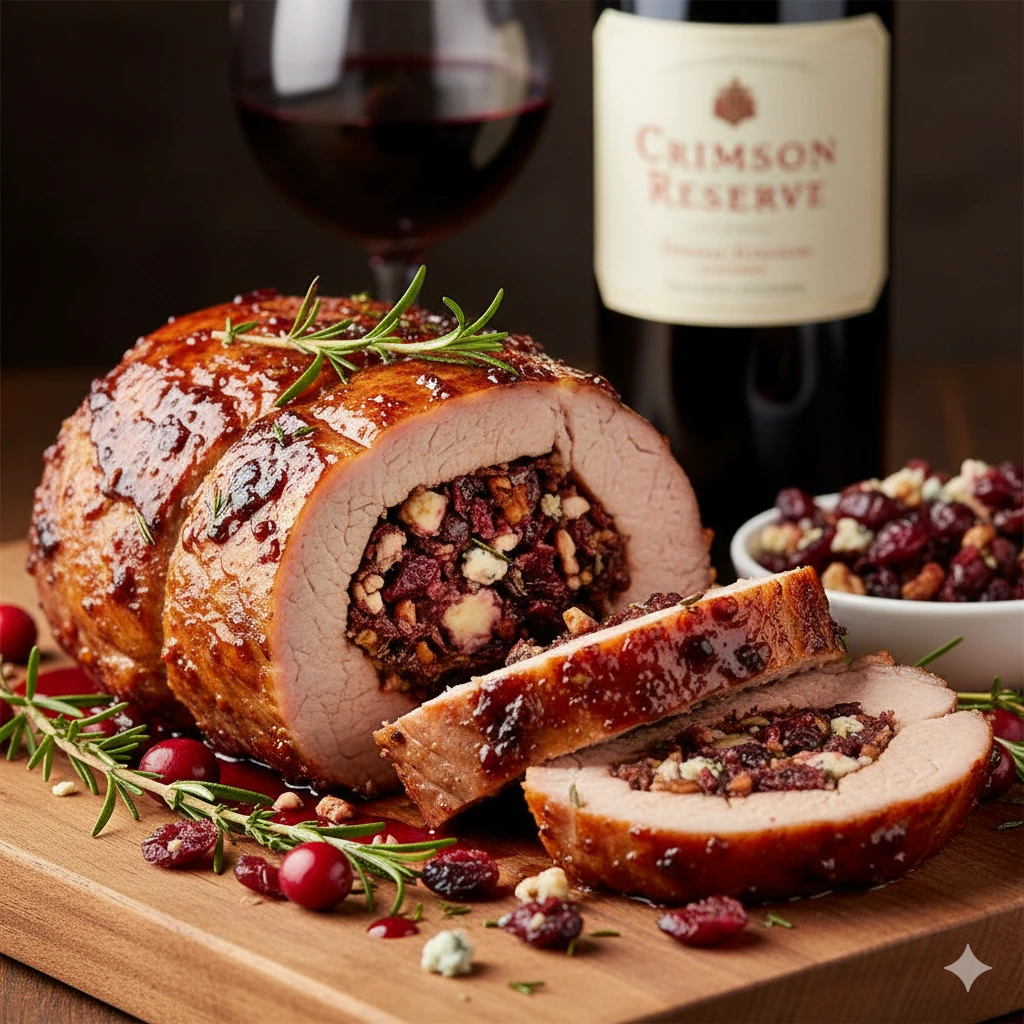
Crimson Reserve Stuffed Pork Tenderloin
A premium pork tenderloin layered with molten cheeses, savory ham, sun-dried tomatoes, fresh spinach, and a
touch of Hottzspice Honey, finished with a bold Morella Pork & Chicken Rub crust. Roasted to a blushing center
and sliced to reveal a rich, crimson reserve.
Serves 4 – 6.
Ingredients
1 Protein: 1 whole packaged pork tenderloin (1½–2 lb), silver skin removed if visible.
2 Stuffing: 4 slices smoked or honey ham (finely chopped), 4 oz (3 slices) pepper jack cheese (shredded/diced), 4 oz (3 slices) Swiss cheese (shredded/diced), 1/2 cup sun-dried tomatoes (julienned), 2 packed cups fresh spinach (roughly chopped), 2 tbsp Hottzspice Honey, 1 teaspoon of Tobias Garlic Salt.
3 Seasoning & Finish: 2½–3 tbsp Morella Pork & Chicken Rub, 2 tbsp olive oil (binder).
CHEF’S METHOD
1 Prepare the Tenderloin: Butterfly the pork tenderloin lengthwise, open like a book, and cover with parchment, and gently pound to an even thickness (about ¾ inch).
2 Build the Filling: Combine ham, cheeses, sun-dried tomatoes, and spinach. Drizzle with Hottzspice Honey and toss gently.
3 Stuff & Roll: Spread filling evenly, leaving a 1-inch border. Roll tightly, seam side down, and secure with butcher’s twine at 1½-inch intervals (Optional securement – Can place seam-side down to hold).
4 Season: Brush lightly with olive oil and coat generously with Morella Pork & Chicken Rub.
5 Roast: Roast uncovered at 375°F (190°C) for 30–40 minutes until internal temperature reaches 155°F.
6 Rest & Finish: Rest 10-15 minutes before slicing. Final temperature should reach 165°F.
CHEF’S NOTES:
Morella Pork & Chicken Rub provides a savory balance without overpowering the filling. Hottzspice Honey adds aromatic heat that cuts through richness. Resting the tenderloin ensures clean slices and molten centers. Cheese substitutes are encouraged…Try Gorgonzola, Gruyere, or even fresh Mozzarella. Use Prosciutto ham as a substitute.
Soaking prime rib in milk is unnecessary and counterproductive. Prime rib is already a tender, well-marbled cut that does not benefit from acid or dairy tenderization. Milk soaking dilutes natural beef flavor, interferes with proper browning, and prevents crust development. High-quality beef deserves dry heat, proper seasoning, and controlled cooking — not masking techniques.
Did you make this recipe?
Share a photo and tag us on social media — we can’t wait to see what you’ve made!