
Steakhouse Crusted Prime Rib Roast
Chef George’s Reverse Roast Method
Ingredients
1 Prime Rib Roast, approx. 9 lb (bone-in preferred if available)
2 ½ cup Tripolizza Extra Virgin Olive Oil (binder)
3 2½–3 tbsp Maggi Seasoning
4 4½–5 tbsp Cleveland Steak Seasoning
5 Optional: onions, garlic, rosemary, thyme for the roasting pan.
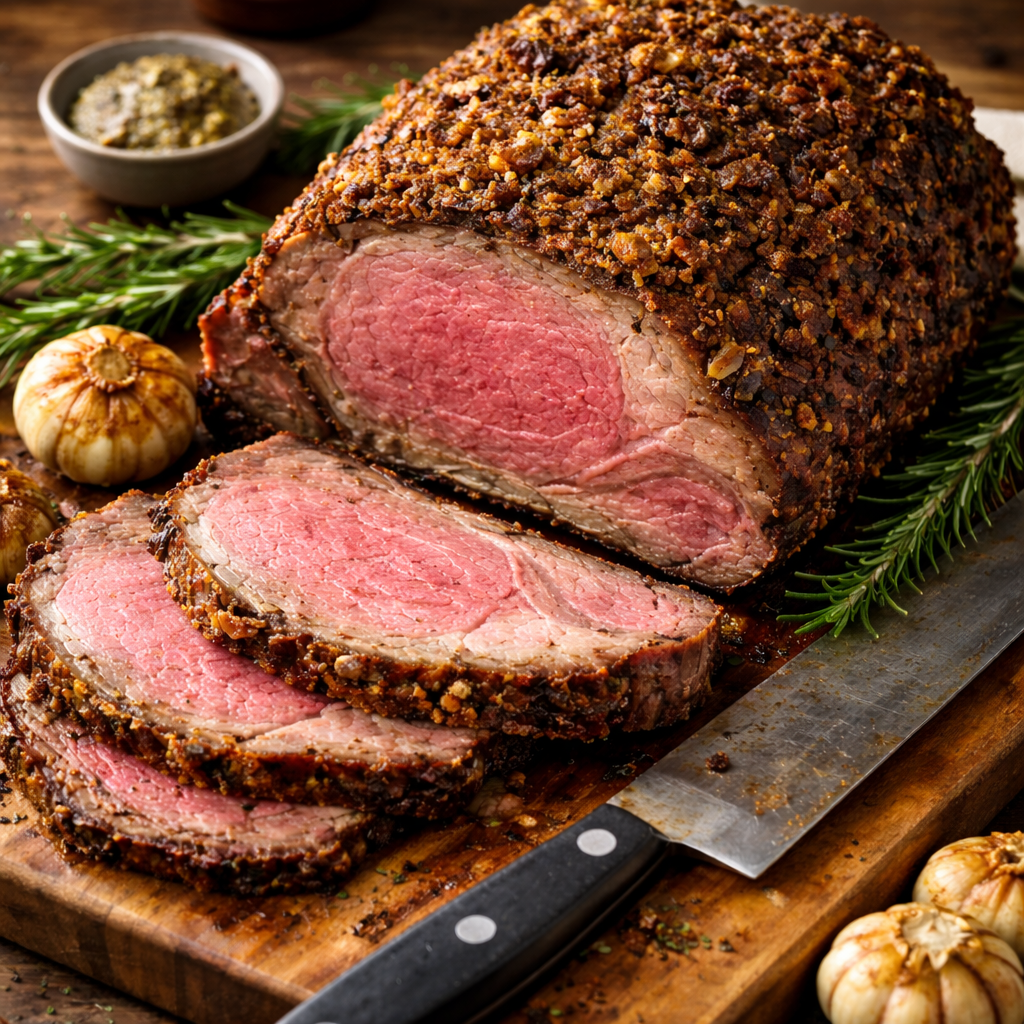
CHEF’S METHOD
1 Temper the Roast: Remove from refrigeration 2–2½ hours before cooking. Pat is completely dry.
2 Layered Seasoning (Ofrenda Method): Brush generously with Tripolizza EVOO. Drizzle evenly with Maggi Seasoning. Finish by pressing Cleveland Steak Seasoning into all surfaces.
3 Low & Slow Roast: Roast uncovered at 250°F until internal temperature reaches 122–125°F for medium rare (approx. 18–20 minutes per pound).
4 Primary Rest: Remove from oven and tent loosely with foil. Rest 30–40 minutes.
5 High Heat Finish: Increase oven temperature to 500°F. Return roast to oven for 10–12 minutes to form a deep, flavorful crust.
6 Final Rest & Carve: Rest 15 minutes before slicing thick against the grain.
WHY THE REVERSE ROAST MATTERS
Reverse roasting cooks the prime rib gently from edge to center, preventing the grey, overcooked outer band common in traditional high-heat roasting. This method delivers even doneness, superior moisture retention, and precise temperature control. The final high-heat blast builds a steakhouse-quality crust without drying the interior — a critical advantage for large, premium cuts.
CHEF GEORGE TECHNIQUE
Replacing buttermilk with heavy cream produces a richer, more controlled ranch. This method prevents separation, allows spice integration, and creates a sauce that performs equally well as a dressing or a dip.
WHY THE REVERSE ROAST MATTERS
Reverse roasting cooks the prime rib gently from edge to center, preventing the grey, overcooked outer band common in traditional high-heat roasting. This method delivers even doneness, superior moisture retention, and precise temperature control. The final high heat blast builds a steakhouse-quality crust without drying the interior — a critical advantage for large, premium cuts.
CHEF’S WARNING: NO MILK SOAKING
Soaking prime rib in milk is unnecessary and counterproductive. Prime rib is already a tender, well-marbled cut that does not benefit from acid or dairy tenderization. Milk soaking dilutes natural beef flavor, interferes with proper browning, and prevents crust development. High-quality beef deserves dry heat, proper seasoning, and controlled cooking — not masking techniques.
Did you make this recipe?
Share a photo and tag us on social media — we can’t wait to see what you’ve made!